
Almost everything explained about EMTI Fervienza is aimed at someone who hasn’t started yet: what a first class looks like, how to choose between Asturian bagpipe and tin whistle, what happens if you’ve never played anything. This article is different. It’s for someone who already plays — at EMTI Fervienza or somewhere else — and is looking for something more specific: to keep progressing, with more demanding repertoire or a particular technique they want to refine. This is how the school’s tracking works when the starting point is no longer zero.
The starting point isn’t a blank box
Adapting the class to the student isn’t only a principle for beginners. For someone who already plays, it means something very concrete: the class doesn’t start from a generic “intermediate level” lesson — it starts from where that person actually is: what they’ve mastered, what’s still difficult, what repertoire they already know, and what they want to tackle next. Tracking, in this case, rests on three decisions that adjust to the student’s real level, not to a fixed syllabus organized by levels.
1. What gets worked on in class, based on real level
There’s no single “advanced level” syllabus that’s the same for everyone. Two students who already play can need very different things: one has solid technique but a limited repertoire; another has several pieces down but carries a specific ornamentation or breathing problem. What each session covers is decided by the teaching staff based on real progress, session by session — not a fixed progression that assumes every intermediate-level student needs exactly the same thing.
A concrete example of what this changes: for a student who already has basic fingering under control, the class stops focusing on that and moves on to working traditional repertoire — more demanding pieces, with more ornamentation and more interpretive nuance — instead of repeating exercises that person has already mastered. The starting point determines what gets worked on, not a lesson number.
2. Assigned tasks, adjusted to that same level
What gets practiced between classes isn’t a generic textbook exercise. It’s assigned based on what that specific person needs to reinforce that week: it can be a full piece for someone who already has solid technical grounding, or a very specific fragment for someone refining a particular fingering or ornamentation issue. The task responds to the real level, not to the next page of a notebook shared by everyone.
3. Assessment from the individual starting point
Progress isn’t measured against an absolute standard, nor by comparing one student to another. It’s measured against where that specific person started. If someone arrives with a high technical level already, progress is assessed relative to that starting point, not against a generic scale designed for someone starting from zero. If someone arrives with a more limited base but progresses quickly, that progress counts just as seriously. The relevant comparison is always with yourself, not with another student or an external benchmark.
Why this isn’t an empty promise
“Personalized tracking” is a phrase that’s been used so much, in so many places, that it can sound like filler. Here it’s made concrete in something verifiable in practice: the content of each class, the tasks assigned, and how your progress is assessed depend on your real level, not on a fixed template with your name stuck on top. Every class is also recorded, with access at any time through our own platform, so you can revisit a specific correction on repertoire or technique during the week, instead of relying only on what you remember from the session.
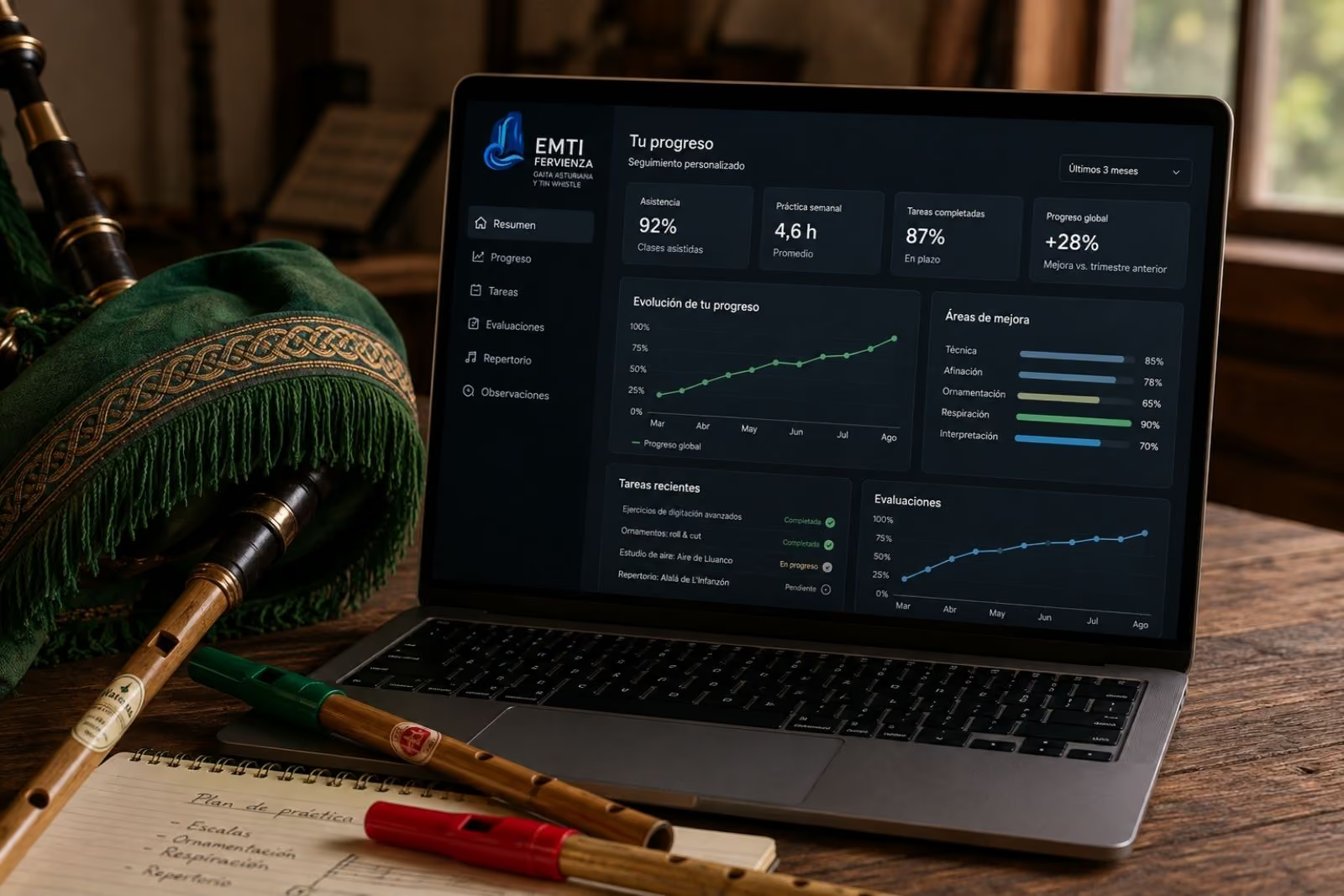
The progress panel shown alongside this article is a test of our system, still being refined — not a screenshot of the final interface. We’re sharing it this way, without dressing it up as something already finished, because we’d rather be transparent about what exists today and what we’re still building.
How to take the next step if you already play
If you already play Asturian bagpipe or tin whistle and want to keep progressing — more demanding repertoire, refining a specific technique, picking the instrument back up after a break — the most direct thing is to tell us your real starting level. English one-on-one classes are on their way — for now, you can get in touch and we’ll let you know as soon as they open. You can check EMTI Fervienza’s course offering, browse the frequently asked questions, or get in touch directly to tell us where you are and what you want to work on next.