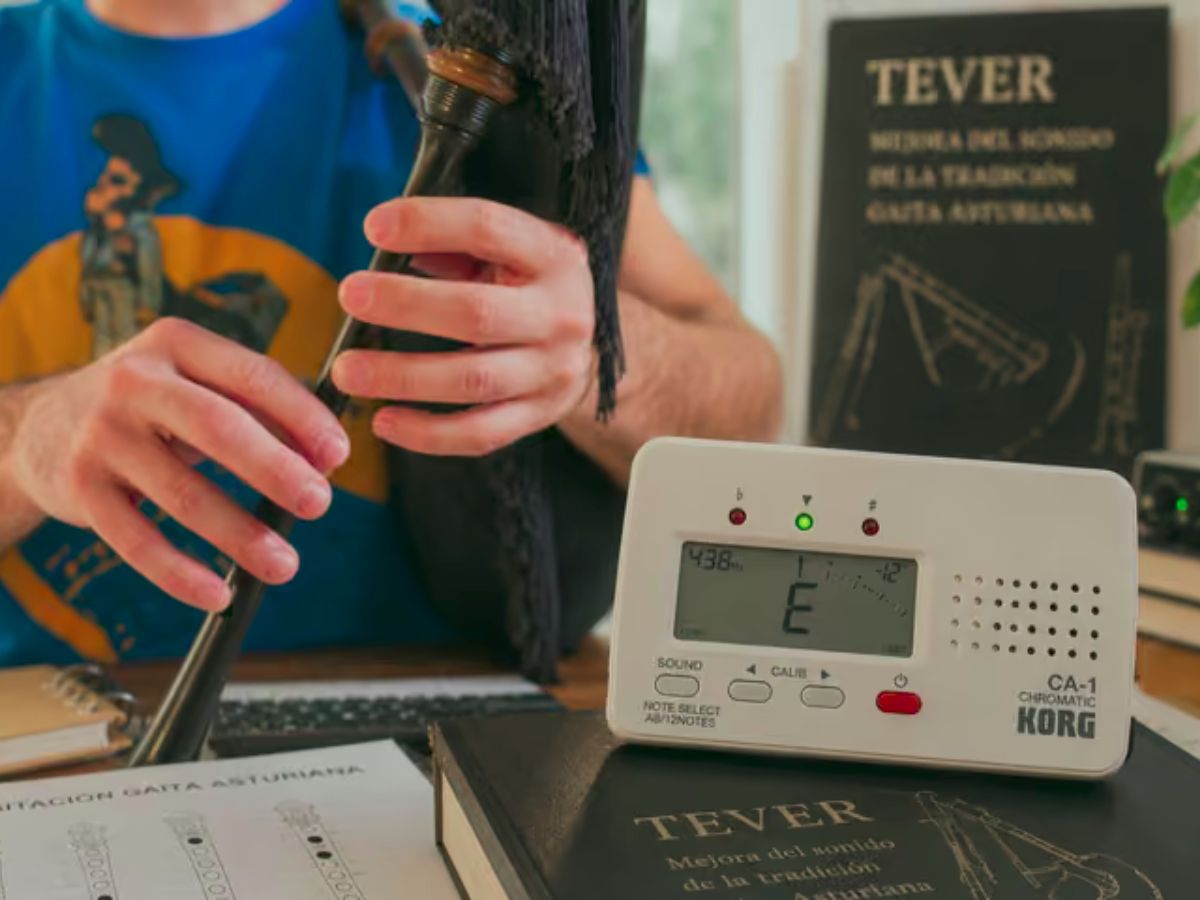
Bagpiper and professional musician
His musical work, his discography and the blog where he writes about Asturian bagpipe and traditional music.
Visit tever.es → EMTI
FERVIENZA
EMTI
FERVIENZA
EMTI Fervienza was born in 2026, founded by Tever Díaz García, Asturian bagpiper, teacher and researcher.
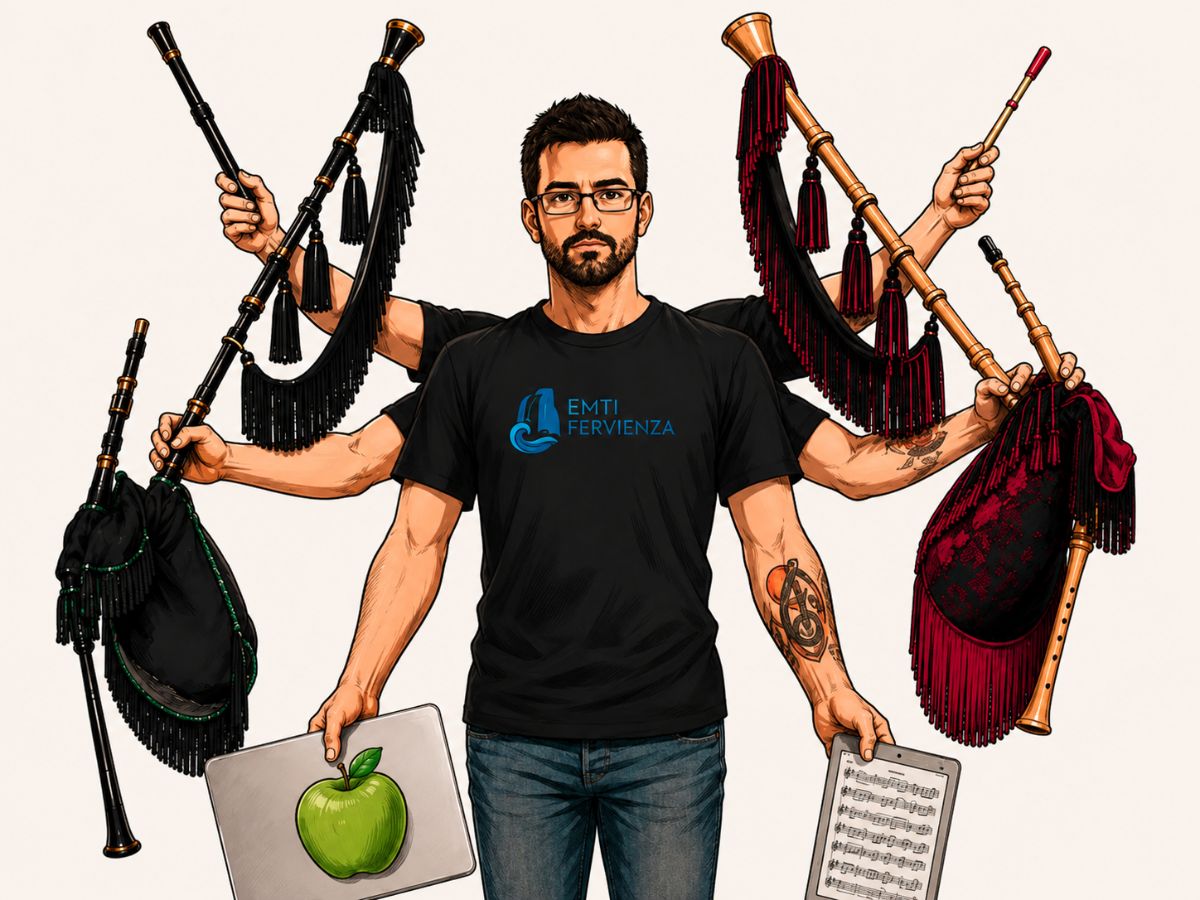
The school was founded with a clear goal: to spread Asturian traditional music. Alongside it, an equally important focus: creating innovation projects where new technologies meet tradition.
For now, EMTI Fervienza operates fully online, offering one-to-one lessons in Asturian bagpipe and tin whistle.
Tever Díaz García has played the Asturian bagpipe since he was a child, in Asturies. He holds a Técnico de las Enseñanzas Profesionales de Música qualification in bagpipe from the Conservatorio de Oviedo, and his musical training is rounded out by years playing in a band and teaching one to one.
Alongside music, his other background is technical: he's a software engineer. That double root — bagpiper and engineer — is what shapes the school: it isn't about replacing tradition with technology, but about using technology to teach and spread it better.
Classes are one to one, online and live. There are no groups or imposed pace: each student moves at their own, from absolute scratch through to refinement. Before starting, we have a preliminary chat to get to know your starting point — there are no entry tests.
We teach Asturian bagpipe and tin whistle as two traditions in their own right, each with its own origin and repertoire, without merging them or treating them as the same thing.

Founder
Asturian bagpiper, teacher and researcher.
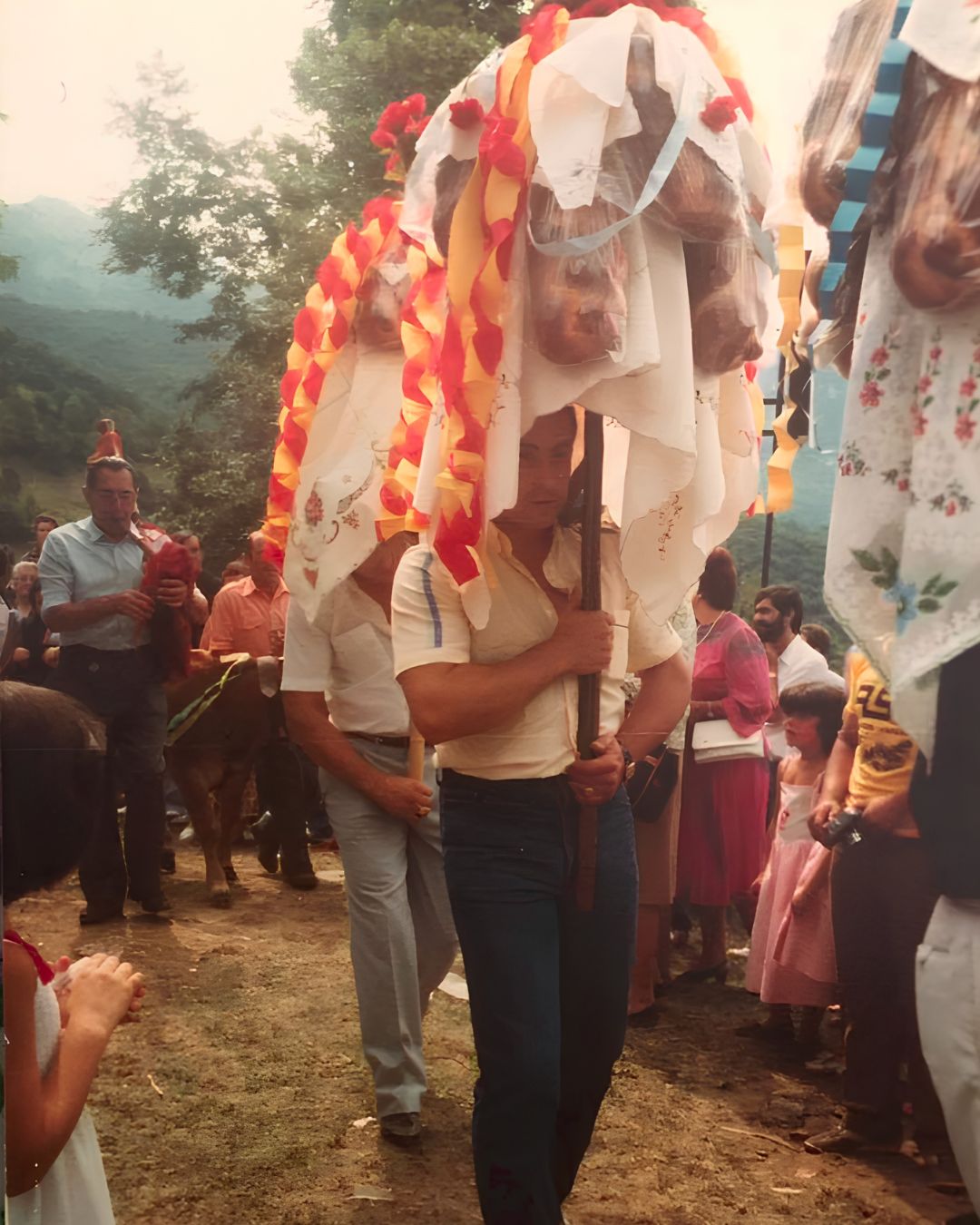
Feast of El Cébrano, Teverga, 1980s. Tever's father, carrying one of the traditional ramos.
In the words of Tever Díaz García, founder:
"I taught bagpipe at the Escuelas Municipales de Proaza y Teverga between 2017 and 2022. During that time I started a research project of my own, Músicos Populares de Proaza y Teverga. Part of the work involved searching for photographs and stories of the bagpipers and musicians who had played in those two councils.
While looking for images for that project, I found a photograph from the 1980s: Juan Huerta, the Teverga bagpiper, in the procession for the feast of El Cébrano, patron saint of the council of Teverga. Among the people in the photo, I noticed someone carrying one of the traditional ramos, in the centre of the image. That face looked very familiar — I paused for a second and realised that person was my father.
Seeing my father in front of the bagpiper reminded me how my family has kept up the tradition of offering the ramu. In that moment I realised my family had already spent many years keeping that part of Teverga's folklore alive.
That's why this Escuela de Música Tradicional e Innovación could have no other name than 'Fervienza'. It's the surname of my father's side of the family — that's what people called them — and there was no better name we could have given this project."
The word Fervienza (or its Galician variant Fervenza and Leonese variant Fervencia) refers to a waterfall, especially one where the water falls with such force that it produces foam and bubbles, giving the impression that it's boiling.
Etymology: from the Latin fervere, meaning "to boil" or "to be in ferment".
Tever Díaz García carries his work as a professional musician and as a researcher on his own websites, outside the school. On tever.es he publishes his work as a bagpiper and composer, with his discography and a blog about Asturian bagpipe and traditional music.
On labs.tever.es he documents his research into computing applied to music, from automatic transcription to other technology innovation projects around traditional music. You can follow each path separately if you'd like to know more.
His musical work, his discography and the blog where he writes about Asturian bagpipe and traditional music.
Visit tever.es →
His research into automatic music transcription and computing applied to tradition.
Visit labs.tever.es →