
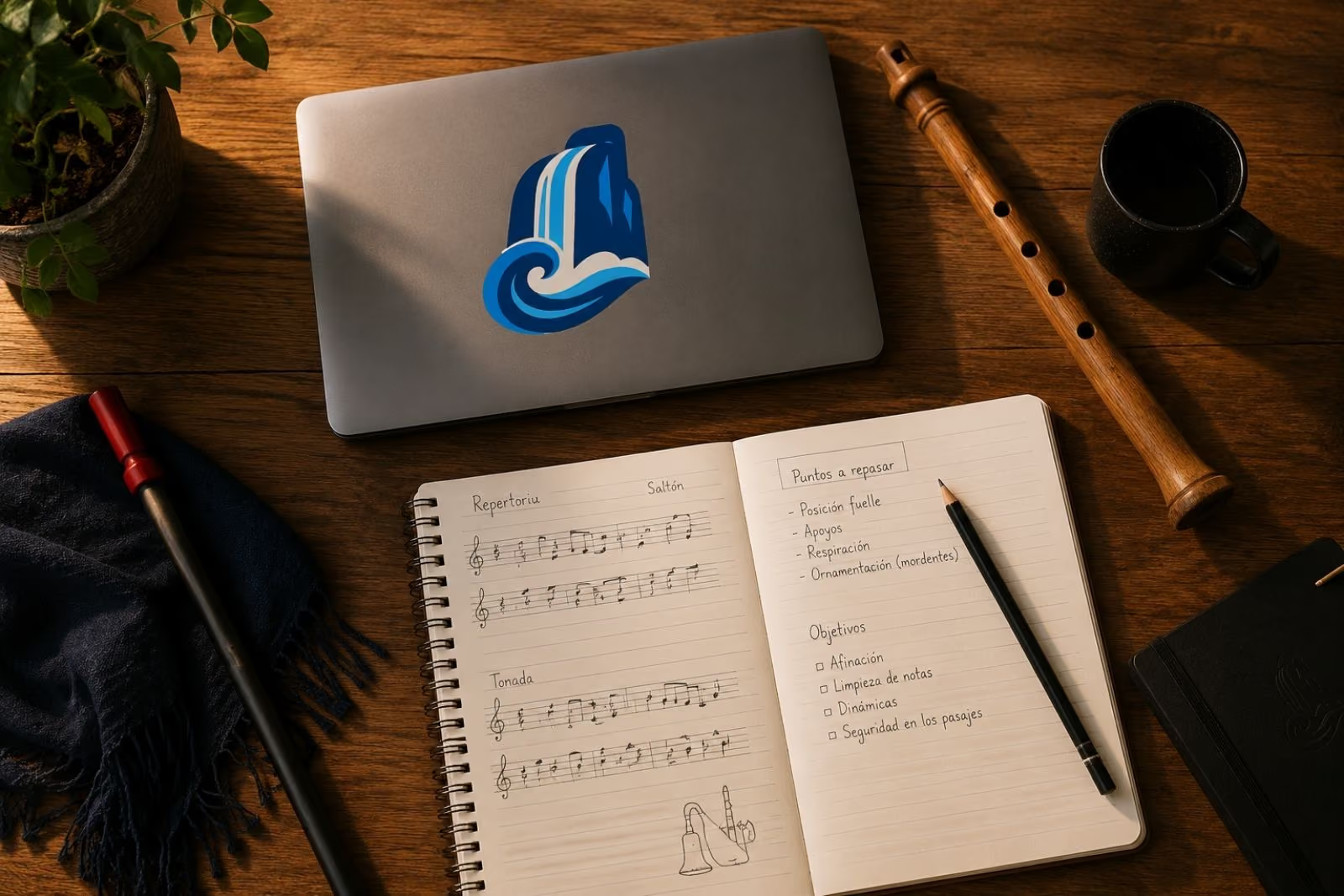
At EMTI Fervienza we always start from the same question: where is this person coming in from? There’s no single syllabus to work through the same way for everyone. There’s a specific student, with a specific starting point, and a lesson built from there. This article explains what that principle means in practice: what changes in a real session when the content adapts to the learner, instead of the other way round.
The starting point: no two students are the same
Two people starting Asturian bagpipe the same month can need completely different things. One arrives with an ear trained on another instrument and struggles with the bellows position — the bag that feeds the instrument with a continuous flow of air — another has never played anything and needs more time on fingering before adding breathing. Neither is “better” or “worse placed”: they’re at different points, and a lesson that treats both the same way doesn’t serve either one well.
Adapting the lesson to the student means it’s the teacher, watching real progress session by session, who decides when to introduce each new technical demand — not a fixed calendar built for an average student who doesn’t exist. In a One-to-One Lesson this is literal: each week’s session adjusts to what that specific person needs to reinforce, not to a numbered lesson that comes up in its turn.
What this means in practice: pace, repertoire, starting level
Three decisions change with this principle compared to a fixed syllabus:
- Pace. The time spent on each technical block — fingering, ornamentation, repertoire — is set by the person’s real progress, not by a date in a closed programme. If something needs two more sessions to settle, it gets them.
- Repertoire. The pieces worked on are also chosen for what motivates and fits each student, within the actual repertoire of the tradition being taught, not from a single list everyone plays in the same order.
- Starting level. Starting from scratch, coming from another instrument, or returning after time away from playing are different starting points that the lesson recognises from the first session, with no entrance exam or level test.
This isn’t exclusive to the One-to-One Lesson: Group Lessons, even while sharing the session with other people, keep the same individual follow-up access outside the classroom, so the group’s pace doesn’t erase each person’s needs.
What supports it beyond the weekly session
Adapting content to each student requires being able to see precisely how they’re evolving, not just remembering it from one week to the next. That’s why follow-up doesn’t end when the lesson does: every One-to-One and Group Lesson includes access to our own platform, available around the clock, with access to the recording of the lesson itself too. That recording isn’t a passive file: it’s what lets the teacher review the exact detail of a session before deciding what to reinforce in the next one, and lets the student review it at their own pace during the week.
The principle isn’t a slogan set apart from the catalogue: it’s the reason those pieces exist designed the way they are. The Xibla, EMTI Fervienza’s Asturian bagpipe learning flute, is another example of the same criterion applied to a different problem — isolating a specific difficulty when it’s time to work on it, not before.
Why this isn’t a fixed method
A principle of adaptation can’t turn, without contradicting itself, into a single procedure applied the same way to everyone. What this approach produces isn’t a more flexible template: it’s a decision made lesson by lesson, with the person in front of you. This means two students at the same starting level can have different progressions, and that a person’s pace can change from one week to the next without that being a problem to solve.
How this shows up in the course offering
If you want to see how this principle translates into a concrete format, you can look at what a One-to-One Lesson is really like, or get in touch to tell us your starting point. One-to-one classes in English are on their way — for now, get in touch and we’ll figure out together how to make it work for you.