
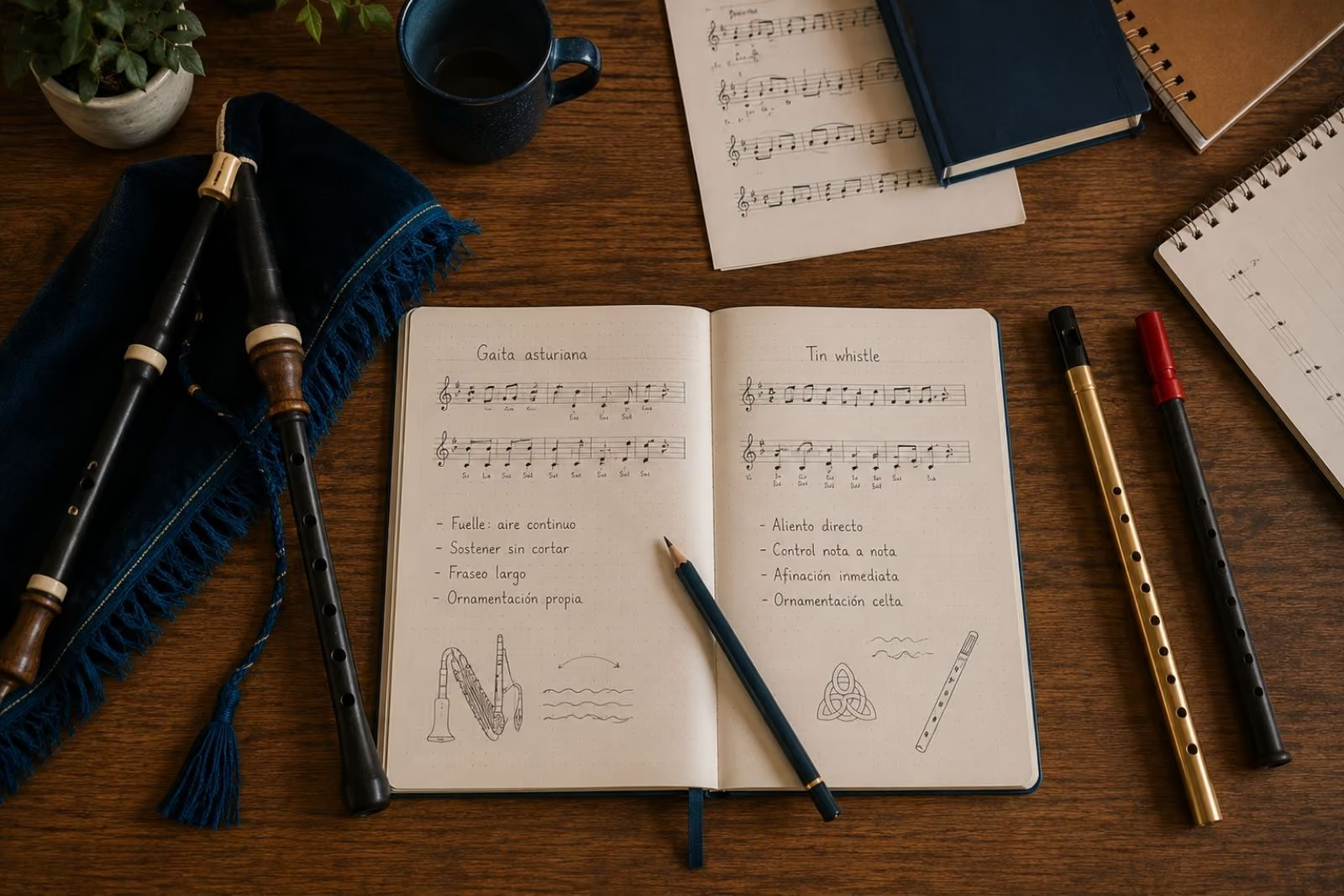
This article doesn’t compare the tin whistle with the Asturian bagpipe to decide which one is better, harder, or more authentic — that question doesn’t have an honest answer, and it’s already covered from the technical angle elsewhere. The question that matters here is different: what happens to a student who learns both traditions at once, in the same school? What does one teach that the other, alone, wouldn’t?
Two traditions, not one with two names
Asturian bagpipe comes from the Asturian tradition: its technique, its repertoire, and the way it sounds all answer to that specific root. The tin whistle comes from the Celtic/Atlantic tradition, with its own repertoire and its own logic of ornamentation. At EMTI Fervienza they’re not presented as close relatives or as versions of one another — they’re sister traditions within what we call the Atlantic arc, each with its own discipline, never merged into one generic identity.
This matters before talking about learning: if they were treated as the same thing under two names, what follows wouldn’t make sense. It’s precisely because they’re distinct traditions that studying them together teaches something studying just one doesn’t.
What Asturian bagpipe gives someone who already plays tin whistle
Someone who arrives at Asturian bagpipe with tin whistle already in hand doesn’t start from zero in everything. Basic fingering and reading the first notes feel familiar. But there’s something the tin whistle doesn’t demand in the same way: managing air as a continuous bellows, not as breath that cuts between phrases.
On the tin whistle, students control the note by blowing directly — there’s an immediate link between what the lungs do in that instant and what sounds. On the Asturian bagpipe, that control shifts to the arm that feeds the bellows, and the stored air sounds continuously even while the player breathes. Learning to hold a melody without the bellows being noticeably “in and out” is a skill the tin whistle, by its own nature, doesn’t teach — because it doesn’t need to.
What the tin whistle gives someone who already plays Asturian bagpipe
In the other direction, something different happens. Someone who already plays Asturian bagpipe and starts with tin whistle meets an instrument that responds instantly to every shift in air pressure: blowing a little harder or softer changes the note directly, with no bellows in between to cushion that variation.
That forces a different kind of precision: listening to your own sound note by note, without the continuous cushion of a bellows carrying what’s already begun. Those coming from bagpipe often discover here a finer relationship with real-time tuning — something their instrument of origin resolves differently, at a different pace.
| Point of comparison | Asturian bagpipe | Tin whistle |
|---|---|---|
| Sound engine | Continuous bellows, fed by the arm | Direct breath, note by note |
| Air-to-note relationship | Indirect: air is stored and managed | Immediate: blowing harder or softer changes the note instantly |
| Precision it demands | Holding the melody without the bellows noticeably “in and out” | Tuning in real time with your own breath, with no cushion |
| What it gives someone from the other tradition | Teaches you to think of sound as continuous, something managed | Teaches you to listen to and hold the note with your own breath |
Not addition, a comparison that teaches better listening
What studying both traditions together gives isn’t simply “twice the technique.” Each one, by contrast, makes visible something about the other that stayed invisible when you only knew one. Someone who has only played Asturian bagpipe takes the bellows for granted as the support of the sound, without thinking about it — until the tin whistle demands they hold the note with their own breath, and they notice, for the first time, how much work the bellows was doing without them realising. And the other way round: someone who has only played tin whistle takes immediate breath control for granted, until Asturian bagpipe teaches them to think of sound as something continuous that gets managed, not fired note by note.
That kind of learning — understanding your own instrument better by comparison with another, not in isolation — is what we look for in EMTI Fervienza’s One-on-One Classes when students decide to study both traditions. It doesn’t replace the technical work within each one: it makes it more conscious.
No hierarchy between the two
None of the above places one tradition above the other. Asturian bagpipe isn’t “more complete” for having a bellows, just as the tin whistle isn’t “purer” for depending only on breath. They’re two different ways of solving the same problem — sustaining a melody over time with air as the engine — and each solves it with a logic of its own that deserves to be learned on its own terms, not measured against the other at a disadvantage.
One-on-one bagpipe and tin whistle classes in English are on their way — for now, you can get in touch and we’ll let you know as soon as they open. If you’re curious how this works in practice, you can check our course offering or get in touch with any specific questions.