
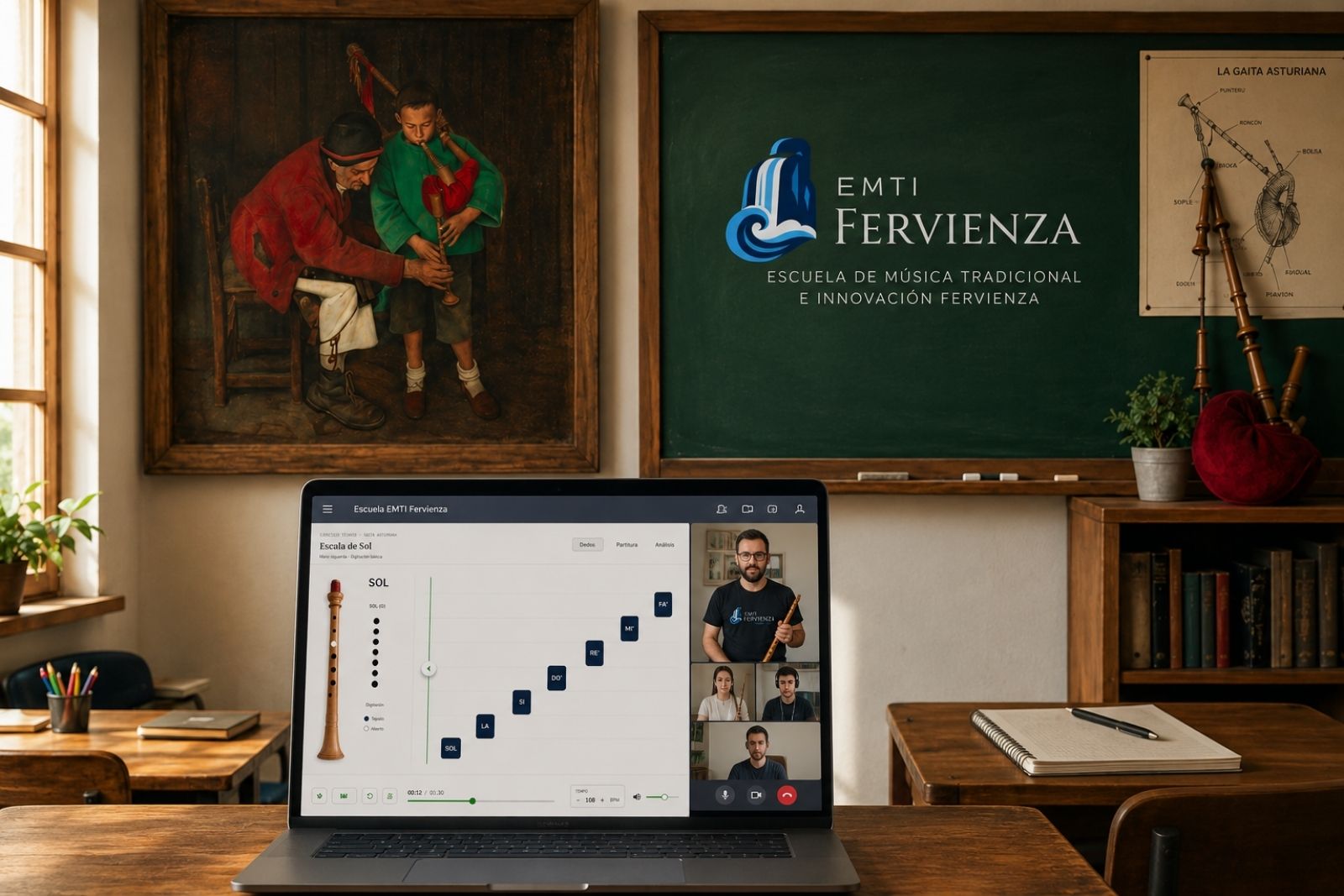
At EMTI Fervienza we teach Asturian bagpipe and tin whistle with one hour a week, live, either one-to-one or in a group class. Here is what happens, in order, from the moment you decide to start through to after the lesson.
Lessons in English are on their way — for now, get in touch and we’ll figure out together how to make it work for you.
Before you start
There are no entrance tests and no minimum level required. You begin wherever you are: if you’ve never played before, the first lesson starts from there; if you come from another instrument or already have experience, the lesson adapts to what you can already do.
If you already have an instrument, we can work with it; if you don’t, that’s no obstacle to starting the conversation about what your lesson would look like — tell us your situation when you get in touch and we’ll sort it out together.
One-to-One or Group? We’ll suggest one based on what you tell us when you contact us — your availability and what you’re looking for in the lesson — but the final decision is yours. And it isn’t final: if you prefer to switch formats later on, you can.
The lesson hour
The One-to-One Lesson is a synchronous, live session, one hour a week, with a single student per session. Because it’s one-to-one, the pace is set by what you need in each moment: if a fingering — where and how you place your fingers on the instrument — takes longer, it stays there for as long as it takes; if something clicks right away, the lesson moves on.
In Group Class the hour is also synchronous and live, but shared with more students — the pace is spread across the group rather than adjusted to a single person, though the session follows the same overall progression.
A lesson hour generally follows this progression, in both One-to-One and Group formats:
- Brief review. What was worked on in the previous lesson and what has settled in more or less.
- Technique. Posture, breathing (in Asturian bagpipe) or fingering (in both instruments), depending on where you are.
- Repertoire or level exercise. Direct application of the technique to a specific piece or exercise.
- Wrap-up and next step. What to practise before the next session and why.
This structure isn’t a rigid script — it’s the shape that, in practice, makes a teaching hour work best: technique with a purpose, not technique detached from the music that needs it.
After the lesson: follow-up
Every lesson is recorded — in Group Class too — and access to that recording is yours, at all times, through our own platform. You don’t have to rely on taking notes during the session or memorising a correction on the fly: you can watch your own lesson again as many times as you need.
Beyond the recording, our own platform adds personalised follow-up: questions answered outside class hours and adjustments as your level develops. Access is tied to your status as an active student — it’s part of the lesson, one-to-one or group, not a separate service you need to sign up for on top.
What to expect from first contact
If you’re deciding whether to take the step, the most direct thing is to write to us and tell us your starting point — with or without previous experience — so we can work out how your One-to-One Lesson would fit. You can also check the rest of our course offering or get in touch directly.